How Bonus Tiers Align With Live Dealer Protocols and Mobile Security Checks Under France's Digital Gaming Framework
Petra Lang · Sep 15, 2026
How Bonus Tiers Align With Live Dealer Protocols and Mobile Security Checks Under France's Digital Gaming Framework
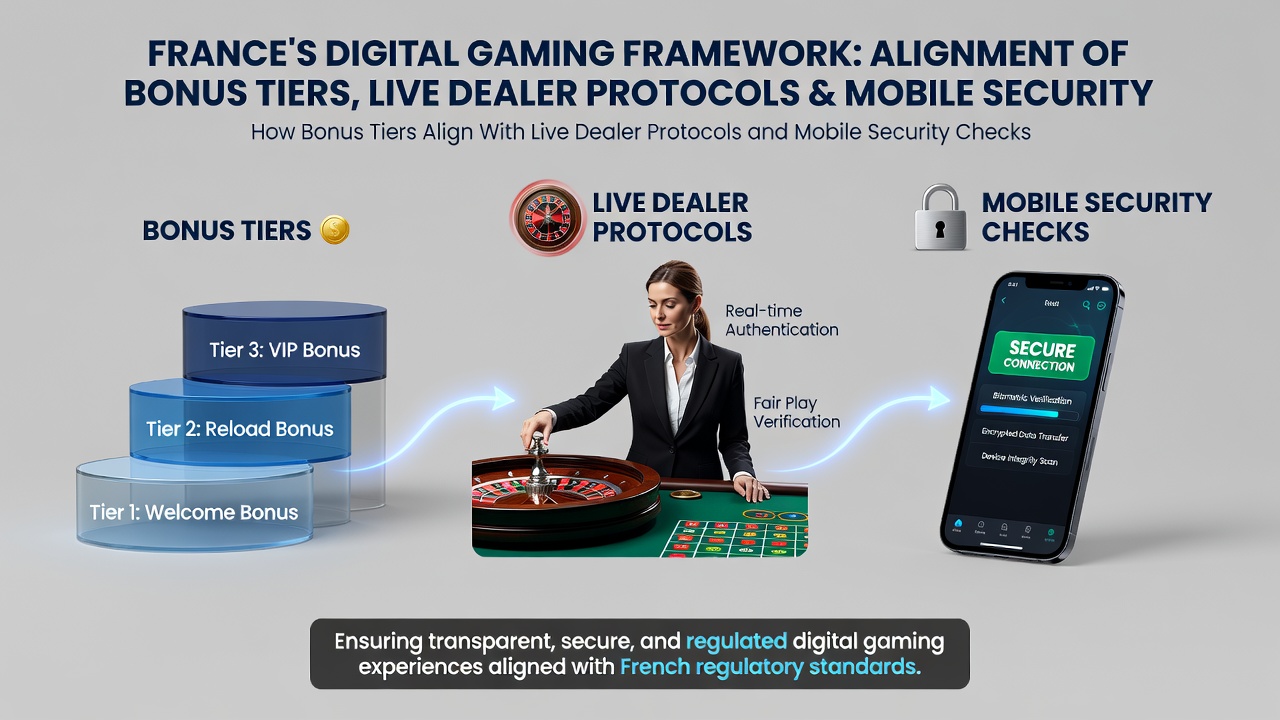
France's digital gaming framework operates under the oversight of the Autorité Nationale des Jeux, which enforces rules that tie bonus structures directly to operational standards for live dealer environments and mobile device authentication. Operators must structure bonus tiers so that each level corresponds with specific verification protocols, ensuring that players complete security steps before accessing higher reward brackets or live table features.
Bonus Tier Structures in Regulated French Platforms
Bonus tiers in French online gaming typically range from entry-level welcome packages to multi-stage loyalty programs, and regulators require these tiers to incorporate progressive security gates. Data from the French National Gaming Authority shows that platforms must log player identity confirmation at each tier threshold, particularly when live dealer access becomes available. This alignment prevents premature unlocking of features that could bypass mobile security layers such as device fingerprinting or two-factor authentication tied to SIM verification.
Operators design the first tier around basic registration and deposit confirmation, while subsequent tiers demand repeated mobile checks that scan for jailbroken devices or outdated operating systems. Research indicates that such layering reduces account sharing incidents by correlating bonus progression with session-specific security tokens generated during live dealer streams.
Live Dealer Protocol Integration
Live dealer protocols in France mandate real-time identity matching that syncs with bonus tier status, meaning players at higher tiers face additional biometric prompts before joining tables. Systems capture facial recognition or fingerprint data at tier advancement points, then cross-reference this information against the initial mobile enrollment records. Studies from European gaming research groups reveal that this synchronization occurs through encrypted APIs that transmit tier status alongside dealer session logs, creating an auditable trail for regulatory review.
Platforms often embed these checks within the live stream interface itself, so a player advancing to a premium bonus tier encounters an automatic security prompt before the dealer acknowledges their presence at the virtual table. This process maintains continuity between reward eligibility and ongoing compliance with France's digital gaming standards effective through September 2026 updates.

Mobile Security Check Mechanisms
Mobile security checks under the French framework involve continuous device health monitoring that aligns with bonus tier requirements, such as requiring fresh location verification when a player unlocks a new reward level. Applications scan for root access attempts or emulator usage at each tier boundary, blocking access until the device passes updated compliance tests. Observers note that these checks integrate with live dealer feeds by pausing streams if a security flag arises during a tiered bonus session, prompting the player to reauthenticate via the mobile app.
Industry reports highlight that French operators deploy machine learning models to predict risk levels based on historical device behavior patterns, adjusting the frequency of security prompts according to the player's current bonus tier. Higher tiers trigger more frequent checks because they unlock larger stakes in live environments, where regulatory bodies require heightened safeguards against fraud.
Alignment Through Regulatory Compliance
Alignment between these elements stems from ANJ guidelines that treat bonus tiers as extensions of the security infrastructure rather than separate marketing tools. Platforms must demonstrate during audits that tier advancement cannot occur without passing mobile security gates and that live dealer participation remains contingent on current tier status. One case documented by regulatory filings involved an operator adjusting its loyalty program so that bonus points accumulated only after successful completion of encrypted mobile handshakes during live sessions.
September 2026 brings refined reporting obligations that require operators to submit aggregated data on how bonus tiers correlate with security event logs, allowing authorities to verify that no tier bypasses live dealer identity protocols. This framework ensures that mobile checks serve as the connective tissue linking reward structures to real-time gaming integrity.
Conclusion
The French digital gaming framework creates deliberate connections between bonus tiers, live dealer protocols, and mobile security checks through mandatory technical integrations and audit requirements. These alignments support consistent enforcement across platforms while maintaining traceability from initial player enrollment through advanced reward stages. Data continues to inform refinements as operators adapt systems ahead of the 2026 compliance milestones.